ARTIST STATEMENT
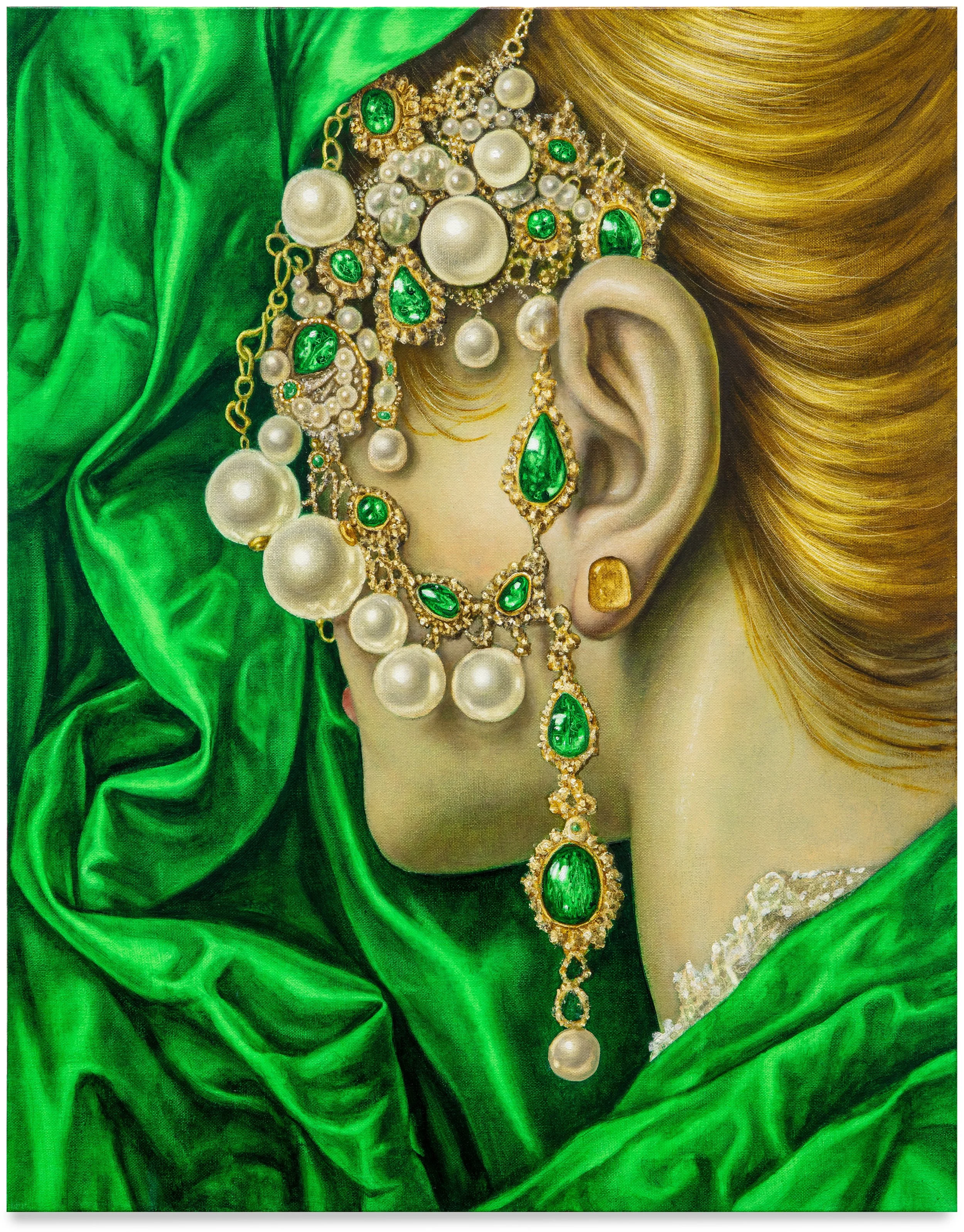
Ornamentation is often dismissed as vanity, but to me, it’s a human instinct, a way to hold warmth, to catch light, to preserve fleeting beauty.
Through maximalist yet intimate imagery, I delve into the symphony of decoration and the quiet soul of objects. I portray ornament not as decadence, but as a form of transcendence, our longing made visible.
I’m drawn to its duality: how fashion and decor can be both comfort and disguise, celebration and facade. We can wear a suit to marry the love of our life, or to defend our life in court. In my work, glistening surfaces shimmer with memory and meaning. Jewelry, fabric, and memento become vessels for intimacy, borrowed hope, and the self we show or hide from the world.
———————————————————————Jeweled, gilded, dreamlike and rhythmically chromatic – in Liu’s effervescent pictorial curation, ornamentation transcends into a vehicle for human emotions. Her serene portrayal of cherished objects serves as an entry point to her introspection into the psychology of decorating. Liu examines fashion and decor both as comfort and glory but also as facade and armor. The tender and emotional imagery challenges the common notion that ornamentation is driven by vanity. Liu considers the human longing for decorating as an innate attempt to capture the warmth that sunlight makes us feel. Jewelry starts as a rough rock, yet after artisanal genius and miracle of optics, becomes a tiny piece of sunlight on our fingers. The will to ornate symbolizes the human capability to transcend, to better, to crystalize fleeting beauty and to live beyond reality. Ever since the cavemen carved their first anecdote, humans have long desired beauty above our heads. Upon entering the palace of Versailles, the extravagance hymns the artists' superpower to bring a piece of heaven into our hearts. In this series of paintings, Liu presents ornamentation as borrowed hope, symbolized light, and an extension of a better self.
Undulating organic curves contrast with elaborate ornamentation throughout, in her surrealist, maximalist and extravagant approach, Liu reanimates classical compositions and motifs from fifteenth century European tradition through contemporary romanticization of cherished objects. Liu’s stylization pays homage to many historic greats: the luscious rendering style of Ingres, the mannerist figuration of Bronzino, the maximalist accessorization of Holbein, the mesmerizing still life of the Dutch Golden Age, the whimsy of surrealist Remedios Varo and the compositional approach of Art Deco artist Tamara de Lempicka.